|
|
Below you'll find a selection of our previously advertised weekly specials, most of which are still available. Before you order, email me personally at barry@sunfarm.com to double check stock. Also there are many, many other plants available for sale that I just haven't had time to write a blurb about, so I've created a special page for them - www.sunfarm.com/otherspecials again, email me personally and I'll get back to you promptly.
Ordering couldn't be easier! Just fill in the pdf order Order Form print it out and send it along with your check to:
Internet Specials Desk
Sunshine Farm & Gardens
696 Glicks Rd
Renick WV 24966 USA
Or inquire about how you can pay using PayPal with no fees to either one of us.
I look forward to sharing these awesome plants with you,

|
![[]](//sunfarm.com/images/allcer2.jpg)
|
Allium cernuum
The Genus Allium is home to hundreds of species including the gastronomically popular Allium cepa (Onions) and Allium sativum (Garlic), not to mention all of the ornamental varieties, and there are an abundance. There isn't a moment during the gardening season that one or more species of Allium isn't abloom in my garden. Such a plethora of colors, textures, shapes, forms and sizes! What a useful family of plants! And speaking of families, the genus Allium once found itself at home in the family Liliaceae, but now has a family of its own, Alliaceae.
[More...]
|
|
|
![[]](//sunfarm.com/images/Alstel.jpg)
|
Allium stellatum
Autumn can be a very dull and boring time in the garden. You miss all the colorful plants that have delighted you spring and summer while you're busy deadheading or collecting seeds. The memories of the flowers you've enjoyed are just that, you're wishing there were perennials that would bring you color and joy this time of year and well..... your wish has come true. The "Plant Genie" wishes to acquaint you with Allium stellatum. Commonly known as "Autumn Onion", Allium stellatum is a native, fall blooming perennial that will grow happily anywhere in the US.
[More...]
|
|
|
|
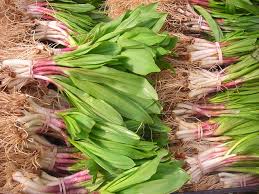
Allium tricoccum
The "Cat Is Out Of The Bag"! The "Word Is On The Street"! Well..... there are a lot of ways to say it, but you get my drift. I'm referring to the same news that I learned over 42 years ago when, as a young, naive lad, I moved to the mountains of Greenbrier County, West Virginia from the streets of Philadelphia. The local folks were enthralled with us, the "Back To The Land," "Hippie Homesteaders" influx and were very eager to teach us the ways of the wild.
[More...]
|
|
|
|
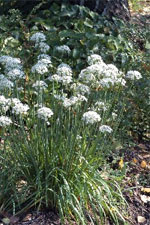
Allium tuberosum
Late Summer, early Autumn is a time of year when there isn't much of
anything going on in most gardens, so permit me to introduce you to one
of my favorite "Shade Brighteners", Allium tuberosum.
I've been growing this reliable plant for over 20 years now and that
period of time encompasses many droughts and several bitter, well below
zero, no snow cover Winters. The 12" - 24" tall, erect stems
have never failed to yield a bounty of large, round, snow white flower
heads that last for weeks. I have it growing in full sun, as well as in
full shade and it doesn't seem to have any preferences as far as light or
soil type goes.
[More...]
|
|
|
|
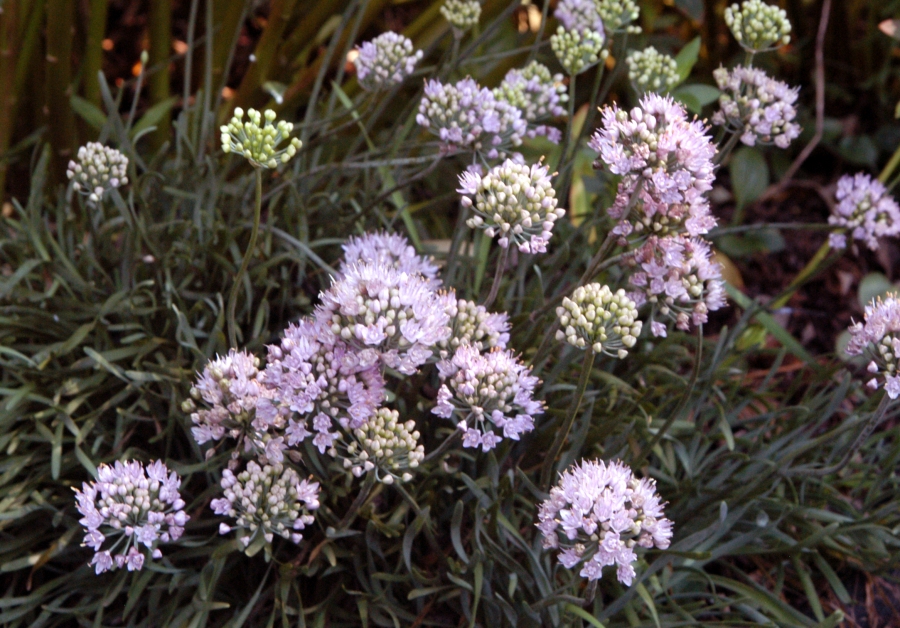
Allium senescens subsp. Glaucum
What a family Alliaceae is!!! Not only has it provided us with delicious and healthful plants such as Allium cepa (Onions) and Allium sativum (Garlic), but it's also home to a plethora of ornamental species. One of my faves, and for a multitude of reasons, is Allium senescens subsp. Glaucum. This clump forming Asian/European native perennial bulb is lovely from head to toe. Known also by the common name of "German Garlic", this especially attractive form of the species sports very subtle, bluish, linear foliage all Spring, Summer & Autumn.
[More...]
|
|
|
|
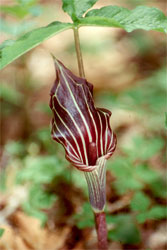
Arisaema_triphyllum
You remember "Jack" from those walks in the woods with your grandfather, those really intriguing, curious flowers that nobody seemed to understand. Arisaema triphyllum, aka "Jack in the Pulpit" is one of the most mystical native plants that I've ever grown. There's nothing like a colony of these guys in the shade garden to stimulate conversation, considering their large Philodendron like leaves (They're in the same family - Araceae), the magical flowers and the dark red seed heads that form in early to mid-Autumn. Not many other plants give you so many seasons of interest.
[More...]
|
|
|
|
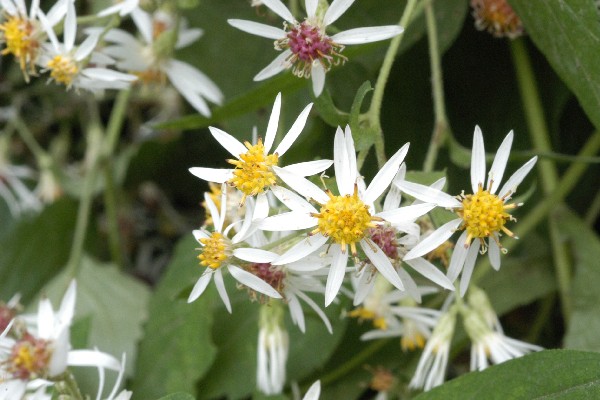
Aster divaricatus
Snowstorm in September -- that's what your shade garden will look like when you plant a drift of
the very easy to grow, reliable native woodland Aster, Aster
divaricatus. The glistening, pure white snowflake shaped flowers have
bright yellow centers that fade to a deep rich burgundy as they slowly
age over their long, long bloom period during late August through mid
October. Here's one of my very favorite plants for interest at a time of
year when there isn't much happening in the garden.
[More...]
|
|
|
|
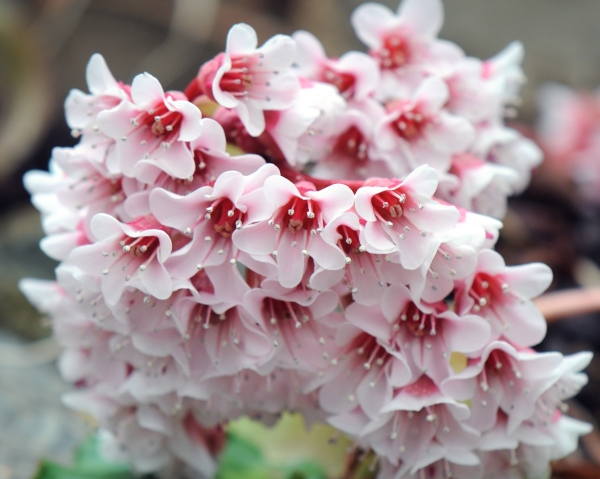
Bergenia Ciliata
A hardy african violet on steroids??? Not quite, but when I'm waltzing visitors around the gardens here, I always pose the same question, "Would you like to see a hardy African Violet on steroids?" They invariably bite as we hurriedly stroll over to a shade bed under a 60 foot tall Betula pendula and I gleamingly point to a particular drift of ground hugging plants. Their jaws drop. The comments usually range from "I had no idea that there was a hardy African Violet" to "I've never imagined an African Violet with foliage that huge."
[More...]
|
|
|
|
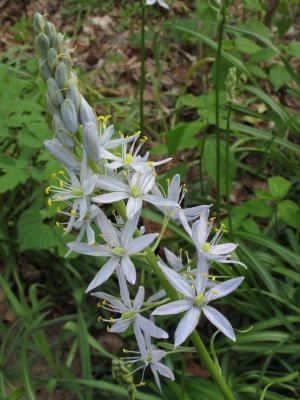
Camassia scilloides
Exceptionally rare! But... exceptionally easy to grow, and exceptionally
rewarding. Camassia scilloides may just be one of the very rarest plants that
I've ever grown, but it's also one of the easiest. Native to almost every
state east of the Rocky Mountains, I can't imagine a climate where it
wouldn't thrive in an average to well drained, shady to dappled sunlight
spot in the garden.
[More...]
|
|
|
|
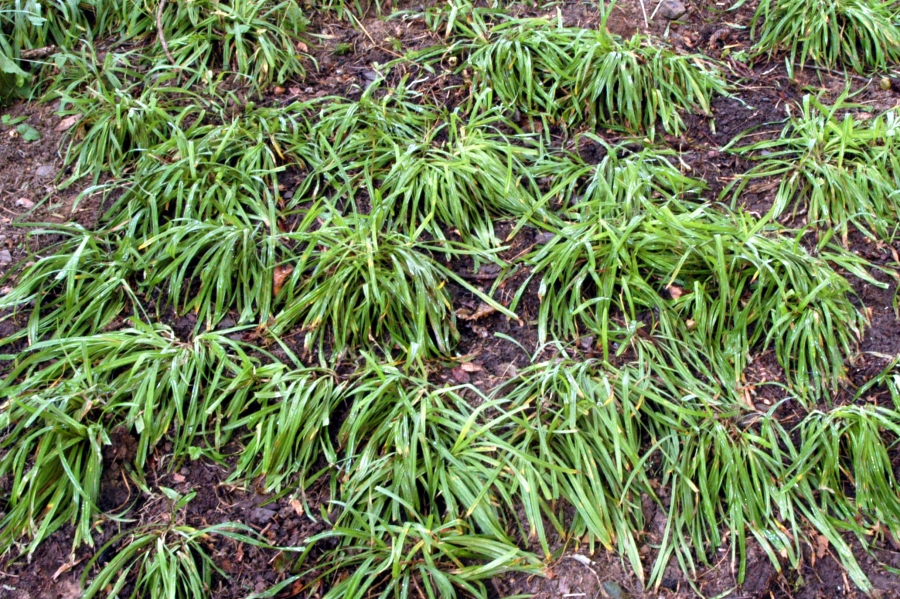
Carex laxiculmis
I'm sooooo very tired of seeing acres of that ubiquitous Liriope used by landscape architects with no imagination at all. While I'll admit that there are a few attractive, variegated forms of this Asian native that have come to be known commonly as "Lily Turf", their hardiness is questionable and they don't do very well in the shade.
Like an answer to a prayer, in comes our native sedge, Carex laxiculmis!
Carex laxiculmis is native to almost every state east of the Mississippi and most of eastern Canada.
[More...]
|
|
|
|
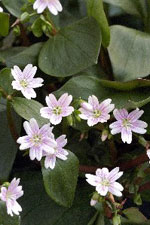
Claytonia sibirica
The commonly spoken name for plants in the genus Claytonia is "Spring Beauty", and with good reason. The species in this genus are know for their early Spring flowers and also for a very brief display and an ephemeral nature. Then along comes Claytonia sibirica, the Russian cousin to our native Claytonia virginica and Claytonia caroliniana. Not only is Claytonia sibirica a long bloomer in the Spring, but it blooms off and on all Summer and Autumn. The foliage stays with us the gardening season long. An easy to grow perennial for the shade garden, it also seeds itself into a dramatic colony in just a year or two. The foliage is thick, supple and seems almost succulent. Five white notched petals on each flower are tinged with a pinkish lavender striping that emanates a soft glow for weeks.
[More...]
|
|
|
![[]](//sunfarm.com/images/clavir2.jpg)
|
Claytonia virginica
I've really never been a big fan of "Common Names" for plants,
but every once in a while, one really hits the nail on the head and
"Spring Beauty" is a resoundingly perfect tribute to
Claytonia virginica, the earliest of the early, ephemeral Spring
wildflowers. Claytonia virginica is native to over half of the US
and to several provinces in Canada -
//plants.usda.gov/java/profile?symbol=CLVI3 . It's one of our
most beloved harbingers of Spring with its dark green, supple, almost
succulent foliage and five petaled white flowers with soft pink
veining.
[More...]
|
|
|
![[]](//www.sunfarm.com/images/clinumb1.jpg)
|
Clintonia umbellulata
Even if Clintonia umbellulata didn't have pure white globular
umbels of long lasting flowers with the cutest little green dots at the
tip of each petal, the lush, thick, supple, tropical looking, orchid like
foliage would be enough to satisfy the desires of even the most demanding
of gardeners.
[More...]
|
|
|
![[]](//www.sunfarm.com/images/croelizgar-1.jpg)
|
Crocosmia 'Elizabethan Gardens'
Crocosmia is a small genus of perennial species in Iridaceae, the Iris family. They're primarily native to grasslands of the Cape Floristic Region of South Africa. The name Crocosmia is derived from the Greek words krokos (saffron) and osme (smell), referring to the saffron-like scent when dried flowers are dipped in water.
[More...]
|
|
|
|
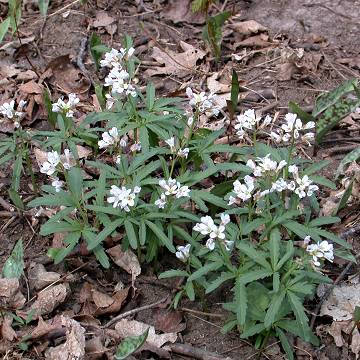
Dentaria laciniata
That's only two of the complimentary adjectives that spontaneously pop
into my mind and best describe our beloved, native Dentaria
laciniata, one of the earliest plants to flower in the
Spring.
Known to legions of wildflower lovers worldwide as "Cutleaf
Toothwort", the bloom can be so prolific that the ground seems
carpeted by snowfall when the long lasting white flowers open.
[More...]
|
|
|
|
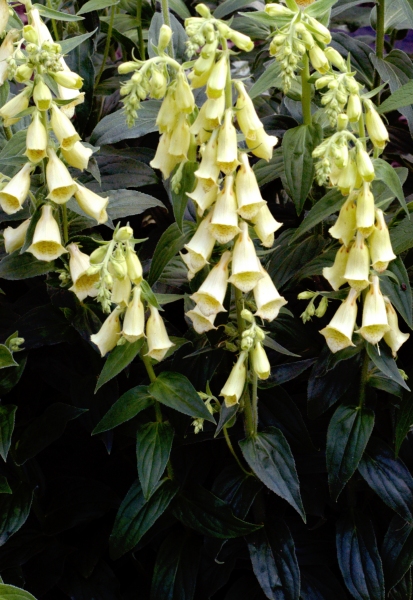
Digitalis lutea
"Foxgloves" are a wonderful bunch of plants for brilliant color in the garden. The problem is, most of them are biennials or very short lived perennials at best. Here's a "Foxglove" that's not only perennial, but self sows itself into a colossal colony of continual color. I've been growing Digitalis lutea for many years now and it's never disappointed me. The long lasting, bright yellow blooms open from the bottom up over a long period of time in early Summer and make great cut flowers. Almost overnight, from a rosette of soft, velvety leaves, multiple 12" - 24" stems arise with dark green foliage and dozens of flower buds.
[More...]
|
|
|
|
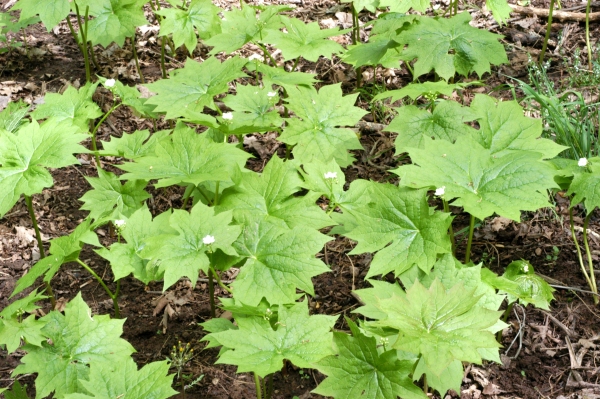
Diphylleia cymosa
Diphylleia cymosa is one of the most striking plants I've ever grown.
Native to 5 southeastern states it seems to be hardy in all 50.
The common name of "American Umbrella Leaf" is quite apropos as her beautifully scalloped leaves can grow up to 24"
and provide a dry spot for all the little critters that seek refuge in your garden during a rainstorm, hence the umbrella reference.
[More...]
|
|
|
![[]](//sunfarm.com/images/disper.jpg)
|
Disporopsis Pernyi
I LOVE the graceful arching stems of Disporopsis pernyi even when they're not in flower. The waxy, supple, glossy foliage they sport is almost succulent in appearance.Some folks errantly refer to this genus as a "Solomons Seal", but if you look at the word Disporopsis and break it down in botanical nomenclature, the suffix "Opsis", from the Greek word for appearance, means "similar to", or "resembling". Consequently, I would take that to mean when the plant was named, it was thought to resemble Disporum, not Polygonatum (the genus of "Solomons Seal").
[More...]
|
|
|

|
Dodecatheon meadia
Meteoric!! Well, maybe that's a bit of a stretch, but "Shooting Stars"
is the common name for Dodecatheon meadia and you really
don't have to stretch your imagination too far to see how folks arrived
at that moniker. Here's a very unusual, easy to grow early Spring
ephemeral wildflower that's native to 27 states east of the Mississippi,
yet will find itself happy and at home just about anywhere.
Dodecatheon meadia is a member of the Primula family, closely
related to Cyclamen and Primrose.
[More...]
|
|
|
|
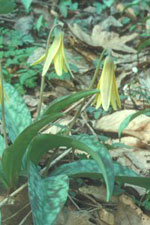
Erythronium americanum
I still haven't figured out the origins of the four most popular "Common Names" for Erythronium americanum, "Dog Tooth Violet", "Fawn Lily", "Trout Lily" and "Adder's Tongue". Hell, I don't even know what an "Adder" is! However, I have an inkling that the name "Trout Lily" has something to do with the colorful marbling of the foliage resembling the markings on a trout. Or perhaps the way the pendulous flowers hang resembling a canine's uppers? In any case, here's a plant that everyone needs to have in their garden. One of the first flowers to bloom in a long series of native ephemeral wildflowers, Erythronium americanum lights up the garden with its curious, pendulous, bright yellow, long lasting flowers.
[More...]
|
|
|
|
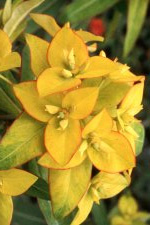
Euphorbia 'Jessie'
Euphorbia 'Jessie' is the first plant that I've felt was worthy of patenting. She's an interspecific Euphorbia hybrid, a cross between E. griffithii and E. polychroma and she brings the best qualities of both her parents into a dramatic 48" to 60" plant.
I'm zone 5 here and we know she's hardy here for the last 7 years. I'd venture a guess that she'll grow well in any state of the US. As far as heat tolerance, my friend Jimmy Turner at the Dallas Arboretum in Dallas TX reported that she didn't blink an eye in 100 degree sun with 100 % RH, now that's one tough plant.
I grow her in full sun and the height is over 6 feet. In shade, you can expect 4 feet to 5 feet. A mature clump can be up to 3 feet in diameter.
Bloom time is the entire month of June here and it's now August and the plants all still look great.
[More...]
|
|
|
![[]](//www.sunfarm.com/images/gcand.jpg)
|
Galtonia candicans
I don't know why this extremely hardy, bulbous perennial from South Africa isn't in everyone's garden.
A lovely, deer-proof member of the Hyacinth family and formerly a member of the Lily family, Galtonia candicans has been at home in my gardens for over 20 years and seems to uncannily coordinate the commencement of its long bloom period with the Summer Solstice, almost to the day. I have it growing in full shade and in full sun, in average soil, in dry soil and in moist soil. It seems to do equally well in all of the aforementioned locations and conditions although it grows noticeably taller in full sun.
[More...]
|
|
|
![[]](//www.sunfarm.com/images/gegeo.jpg)
|
Geum Georgenberg
Commonly known as "Avens", the genus Geum is in the Rosaceae (Rose) family. I grow them in full sun and full shade. They seem to prefer the sun and this particular cultivar is very generous in producing an abundance of offspring in its tight, compact, round clump. Plant height is 3" to 6" and in a couple of years, they'll form an almost perfectly round 12" plant with dozens of divisions that you can share with your friends.
[More...]
|
|
|
|
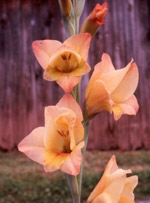
Gladiolus 'Boone'
I LOVE apricots, but I've NEVER seen an apricot-colored flower until I saw Gladiolus 'Boone'. This unusual plant has been the cornerstone of my cut flower garden for over a decade now. It was discovered by Jeff Owen, a County Extension Agent in Avery County, NC at an abandoned homestead in Boone NC, and given to Dick Bir, the native woody plant guru and author of "Growing and Propagating Showy Native Woody Plants".
[More...]
|
|
|
![[]](//sunfarm.com/images/hnig1.jpg)
|
Helleborus Niger
My most floriferous Helleborus niger (seen to the left) is the pollen parent of all the Helleborus niger plants that I'm offering for sale now. I've sourced germplasm for the breeding work that I've been doing with this species for decades from every corner of the planet. If you're not that familiar with this plant, lovingly referred to as the "Christmas Rose", I'll mention that it's actually the first Hellebore I grew over 30 years ago and the plant that spawned my continuing love affair with the genus Helleborus.
[More...]
|
|
|
![[]](//www.sunfarm.com/images/roses2.jpg)
|
Helleborus x hybridus 'Sunshine Selections'
No matter where you live, whether you make your home in the snowy American Heartland, warm subtropical Florida, the frozen mountains of Maine, sunny southern California, or the moist Pacific Northwest, you can grow flowers like these in your own backyard.
Even if you believe that you're cursed with a "Black Thumb", you will succeed. That's how easy they are.
Not only will they grace your table with beautiful cut flowers, they'll provide color in your landscape at a time when there virtually is none. And....they're such long lived perennials that they'll still be thriving when they plant you in the ground.
[More...]
|
|
|
|
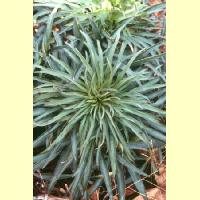
The "Other" Hellebores
Discover Helleborus foetidus, the pure species, plus
Helleborus foetidus'Miss Jekyll', 'Silvertooth', 'Sopron', 'Frenchy'.
Poor, poor Hellebore foetidus! Their common name, "The Stinking Hellebore", has caused
them to be overlooked as the fantastic garden plants that they are.
This incredibly variable species has the most graceful palmate foliage of any of the species
within the genus Helleborus and are very easy to grow.
Hellebore foetidus is hardy in every state of the U.S. and are perhaps the hardiest of all Hellebores. In most areas, a couple hours of sun are appreciated and only in the deep South do they require full shade.
[More...]
|
|
|
![[]](/images/hemthu.jpg)
|
Hemerocallis thunbergii
Imagine a daylily 84" tall. That's 7 feet! And imagine one that has
sturdy flower stems with brilliant yellow flowers and an intense sweet
fragrance. Well, imagine no more, because it exists. I'm describing
Hemerocallis thunbergii, a native of Japan, and an essential,
worthwhile addition to any perennial garden. As with most
Hemerocallis, this is quite the easy plant to grow. I grow it in full sun
and it makes a 24" -36" wide clump in just a couple of years.
[More...]
|
|
|
![[]](hepatica_acutiloba150.jpg)
|
Hepatica acutiloba
I've been breeding and selecting Hepatica acutiloba and
Hepatica americana for the last eight years now, specifically for
silvery marbled foliage. In the process, I've accumulated a very large
stock of lovely, white flowered Hepatica acutiloba with medium
green foliage. Hepaticas are one of the most reliable, durable,
desirable and perennial early Spring native wildflowers.
[More...]
|
|
|
![[]](/images/hxv2.jpg)
|
Hexastylis Virginica
Here's an extraordinarily exciting, exquisite example of an extremely beautiful, exceedingly rare, extra nice, exceptionally easy to grow exotic plant that you will not find offered for sale anywhere else in the universe. I'm very excited to be able to share this exclusive treasure with you.Let me explain.Hexastylis virginica is a native, evergreen "Wild Ginger" with the most beautiful, thick, supple, glossy, silvery marbled foliage you've ever seen.
[More...]
|
|
|
![[]](/images/hycan7.jpg)
|
Hydrastis canadensis
Golden will be the first word to enter your mind when you see the roots,
rhizomes and dormant buds of Hydrastis canadensis. You'll
understand immediately why the common name is
"Goldenseal". This very useful native woodland plant will
not only charm and entertain you Spring, Summer and Autumn, it can even
heal you.
[More...]
|
|
|
|
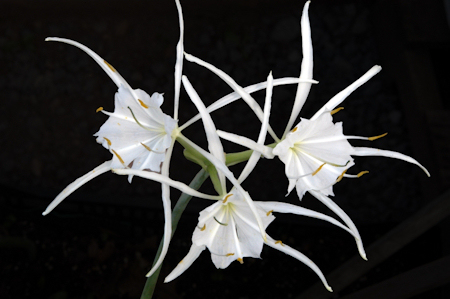
Hymenocallis caroliniana
You'd think that a plant bearing flowers with such an exotic appearance would be temperamental, short lived and tricky to grow, but the truth is quite the contrary. Although everything about this delicate, fragile looking lady screams tropical, hot house beauty, the opposite couldn't be more true. In fact, I've shared space in my brutal zone 5 garden with her for over 30 years.
[More...]
|
|
|
|
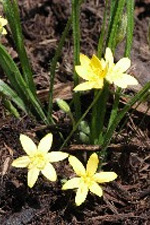
Hypoxis hirsuta
There aren't very many plants that would conjure up the use of the
adjective "adorable" to describe them, but in this case I deem
it justifiable. Put on your sunglasses!!!
"Yellow Star Grass" is a VERY appropriate name for Hypoxis
hirsuta, although the yellow color of the flowers is so brilliant,
you may want to call it "Golden Star Grass".
[More...]
|
|
|
|
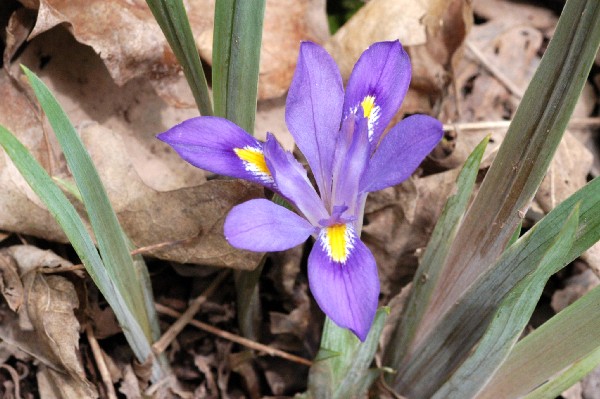
Iris verna
Iris verna is one of my very favorite spring wildflowers. I so
look forward to the bright, bold yet delicate three dimensional blooms
held tightly against the plant. The vivid colors stand out from a great
distance and draw you ever closer. Being a very vigorous clump forming,
long lived perennial, you never have to fret about it becoming a nuisance
in the garden.
[More...]
|
|
|
|
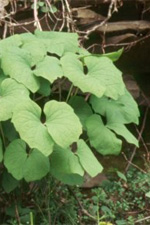
Jeffersonia diphylla
Jeffersonia diphylla is an early blooming, long lived, shade
perennial that's extremely hardy and very easy to grow in virtually any
climate. One glance at the image and you'll instantly understand why the
common name is "Twinleaf".
At maturity, the height is 12" - 24". Its spread can be up to
24" and its imposing stature is almost shrublike. The pure white
flowers are about an inch across and although very ephemeral, they are
produced in abundance and make a striking display.
[More...]
|
|
|
|
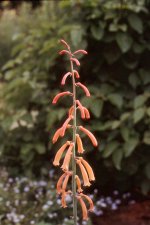
Kniphofia thompsonii snowdenii
The genus Kniphofia is primarily a South African native, but they're easy
to grow in virtually any location in the U.S. There are many named hybrid
cultivars of Kniphofia available on the market and most of those
commercially available are cultivars of Kniphofia uvaria.
Kniphofia thompsonii snowdenii, in addition to being extremely
hardy, is very rhizomatous and in a year or two, you'll have an
attractive, large clump that produces multiple flowering stems. The
pendulous, tubular 1-2" flowers on 12-36" rigid
stems make GREAT cut flowers as they open slowly over their long
flowering period in early to mid Summer.
[More...]
|
|
|

|
Lamiastrum galeobdolon 'Herman's Pride'
I wish I knew who Herman was to thank him for this fantastic groundcover. Formerly in the genus Lamium, but moved to the monotypic genus Lamiastrum, Lamiastrum galeobdolon 'Herman's Pride' may be a mouthful to pronounce but it's an extremely useful groundcover. Even when not covered for weeks in brilliant canary yellow flowers, its silvery variegated foliage illuminates the shadiest of areas.
[More...]
|
|
|
![[]](/images/lsup.jpg)
|
Lilium superbum
The specific epithet for Lilium superbum is one of the most
appropriate I've encountered - SUPERB, as the images below will speak for
themselves without any embellishment from me.
Just about the entire eastern half of the US is home to natural
populations of this plant -
//plants.usda.gov/java/profile?symbol=LISU but there isn't a
garden anywhere in the world where this beauty wouldn't find itself happy
to grow.
[More...]
|
|
|
|
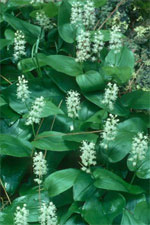
Maianthemum canadense
Maianthemum canadense is one of my all-time favorite native groundcovers. It forms a dense mat of glossy green foliage that emerges through the leaf litter in my garden very early in the spring. Even after the long flowering period, the foliage is persistent the growing season long. Maianthemum canadense spreads by underground runners (stolons) to quickly form a natural colony. I would never consider it invasive or even aggressive.
[More...]
|
|
|
|
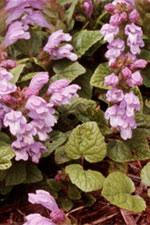
Meehania cordata
When Thomas Meehan, a Philadelphia Botanist, died in 1901, I'm sure he went to the big forest in the sky feeling proud that Nathaniel Lord Britton (1859-1934), named a genus of plants in his honor. I'd also bet that he didn't now how wonderful his namesake plant was.
[More...]
|
|
|
|
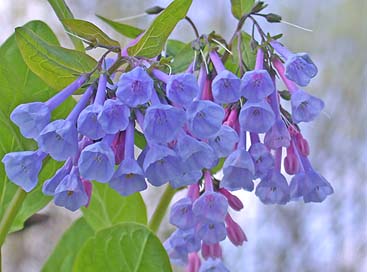
Mertensia virginica
America's favorite wildflower is sound asleep right now, tucked in under
a lovely white blanket of snow, my favorite mulch. But before you know
it, the snow will melt, the ground will warm and tight little
purplish-green buds of Mertensia virginica will be pushing their
way up towards the heavens. These buds gently unfold into 12" -
24" medium green stems over the following week or two and reveal
clusters of pinkish-blue, pendulous flower buds that burst open into the
softest, pastel blue flowers. As the flowers age, they ever so slowly and
magically turn a subtle shade of light pink.
[More...]
|
|
|
|
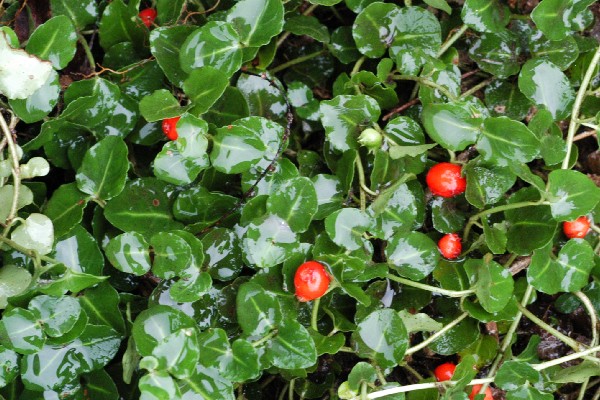
Mitchella repens
And a partridge in a pear tree...
Forgive me for borrowing a line from that little ditty that some wily Jesuit priests penned in the 16th century, but I couldn't think of a more clever way to introduce you to Mitchella repens, aka "Partridge Berry". Yes, it's only the middle of November, not even Thanksgiving yet, but already my local Walmart has rolled out the Christmas decorations.
[More...]
|
|
|
|
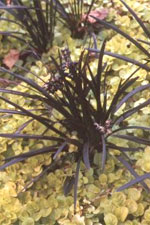
Ophiopogon planiscapus nigrescens
Often referred to as "Black Mondo Grass", this cool little
plant is actually a member of the Lily family and not a grass at all.
I've been growing it for over 15 years now here in zone 5, although many
of the books say it's hardy only to zone 7.
[More...]
|
|
|
|
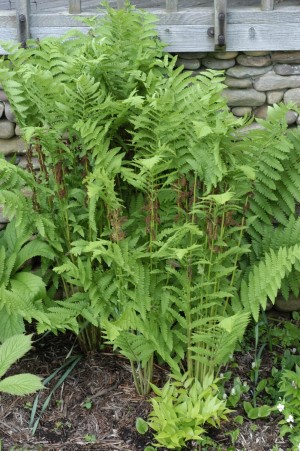
Osmunda claytoniana
My Very Favorite Fern. I love all ferns, but pressed to come up with a favorite, I'd have to say
that it's Osmunda claytoniana, the "Interrupted Fern".
This extremely easy to grow native fern makes up one third of the US
Osmunda family. Osmunda claytoniana is easily grown in
medium to moist, even wet soils in part shade to full shade. In its
native habitats, it usually is found in moist, rich, humusy, acidic
soils, but happily adapts to much lesser conditions.
[More...]
|
|
|
|
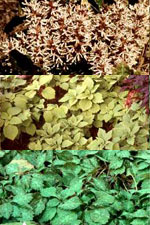
Pachysandra procumbens
In most cases, I've discovered the Asian counterpart of our native plants to be much showier, more robust and, in many instances, more floriferous than our native species. Take Claytonia for example. Our native Claytonia virginica and Claytonia caroliniana are very early, beautiful little plants. However, although their flowers are lovely, they're very small and the entire plant is extremely ephemeral. On the other hand, Claytonia Sibirica has thicker, more deeply veined foliage and it flowers for months.
One major exception to this rule is Pachysandra procumbens. It's an East Coast member of the Buxaceae (Boxwood) family and is commonly referred to as "Allegheny Spurge". This plant is superior to the more commonly used (Asian) Pachysandra terminalis in virtually every respect.
[More...]
|
|
|
|
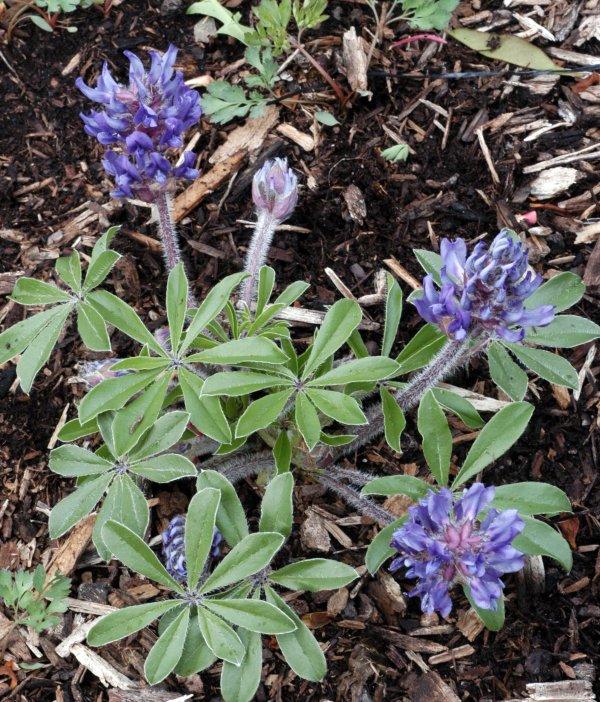
Pediomelum subacaule
Let's face it, for some mysterious, pre-programmed, genetically imprinted reason, as a species, we gardeners are always on the hunt for those elusive blue flowers. Well......... whilst I can't tempt you with a blue Hellebore or a blue Daylily, I have something for you that will fill the bill in the meantime. Here's a plant that I'll wager, you don't already grow and is a plant you've never even heard of. Not only that, you shan't find it elsewhere, as I'm the only fellow on the planet, maybe even in the entire universe, that has it in production.
[More...]
|
|
|
![[]](//www.sunfarm.com/images/ppjea3c.jpg)
|
Phlox paniculata 'Jeana'
I guess you could say that I have a
Love/Hate
relationship with Phlox paniculata .
That was until my friend, Jeana Pruitt emerged from a colony of over
100,000 Phlox paniculata near her home in Nashville TN with one
plant that she deemed to be radically different than all the rest. And...
after growing her Phlox for over 10 years, this skeptical, yet optimistic
gardener is unequivocally convinced that this is the best selection of
Phlox paniculata EVER!!!
[More...]
|
|
|
|
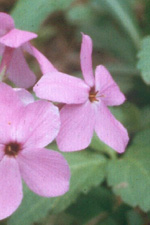
Phlox stolonifera
Phlox stolonifera carpets the earth in a particularly colorless
area in my shade borders. During the several weeks that it's in bloom,
the brilliant clouds of magenta light up the woods. In the wild, her
flower color can be very variable, from white to a light violet blue to a
deep cerise and every shade in betwixt and between. My chosen selection
(shown) falls somewhere in the middle of that
grand color scheme. There are also several named cultivars.
[More...]
|
|
|
|
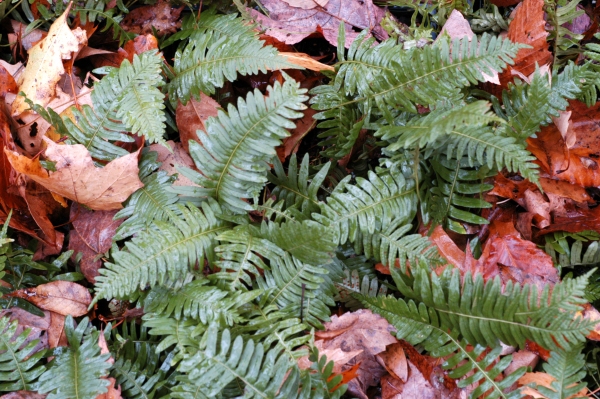
Polypodium virginianum
Polypodium virginianum aka the "Rock Polypody" is native to just about every state east of the Mississippi, Alaska, almost every province in Canada and all the way north up to Greenland and Iceland. The name for the genus comes from the Greek, polus, "many" and podos, "foot", "many footed".[More...]
|
|
|
|
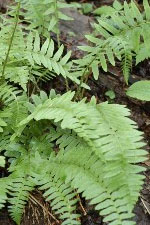
Polystichum acrostichoides
It's time
that you heard more about what is most likely the most indestructible
fern in the world, the "Christmas Fern". Known in botanical circles
as Polystichum acrostichoides, here's an evergreen native fern
that can take almost anything you can throw at it. This is a native fern
that can be found growing naturally in every state east of the Rocky
Mountains.
[More...]
|
|
|
|
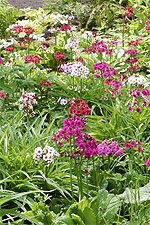
Primula japonica
The plant family Primulaceae is home to many genera (plural of the word
genus) of plants. The most well known, of course, is the genus Primula,
commonly known as "Primroses". Too many people think of the
annual primrose that you buy at Walmart, Primula obconica, when
they hear the word Primrose. Truth be told, most Primroses are long-lived
perennials. The genus Primula is separated into 18 sections. The plant
I'm singing the praises of today, Primula japonica, is in the
Proliferae, or "Candelabra" section, so named for its flower
form.
[More...]
|
|
|
|
|
"Ramps"
The "Cat Is Out Of The Bag"! The "Word Is On The Street"! Well..... there are a lot of ways to say it, but you get my drift. I'm referring to the same news that I learned over 42 years ago when, as a young, naive lad, I moved to the mountains of Greenbrier County, West Virginia from the streets of Philadelphia. The local folks were enthralled with us, the "Back To The Land," "Hippie Homesteaders" influx and were very eager to teach us the ways of the wild.
[More...]
|
|
|
|
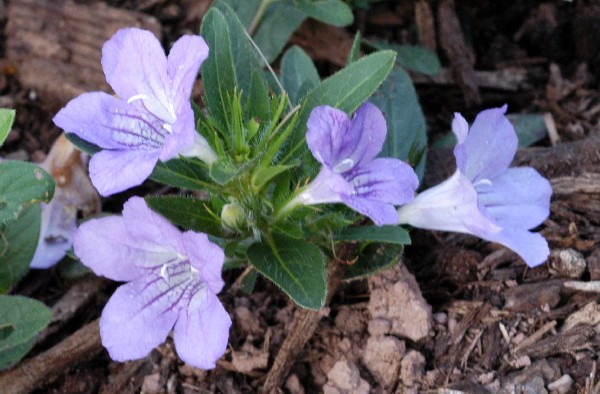
Ruellia humilis
"Wild Petunia" is the common name for a
genus of plants in the Acanthaceae family known as Ruellia. The charming
plant pictured below is Ruellia humilis, a very easy to grow,
native, flowering perennial. It can be found growing wild in exactly half
of the states in the US -
//plants.usda.gov/java/profile?symbol=RUHU The specific epithet
"humilis" refers to the low growing habit of the plant. In that
respect, I've used this colorful, long flowering plant as a ground cover.
The deer pay no mind to it, and it can take full sun to full shade quite
well. I grow Ruellia in average soil but have trialed it in various
conditions and the only habitat this plant seems to object to is wet
soil.
[More...]
|
|
|
|
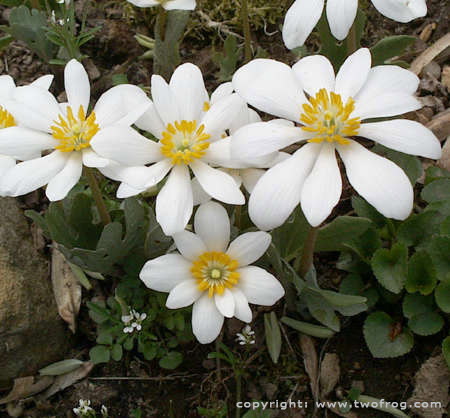
Sanguinaria canadensis
Yes, the common name for our beloved Sanguinaria canadensis
is "Bloodroot". This makes perfect sense as a break in the
surface of the plant, especially the roots, reveals a reddish, bloodlike
sap. The plant was once used as a dye and for an herbal remedy by early
Native Americans. Sanguinaria canadensis is native to every
state in the US and to every province of Canada east of the Rockies.
Consequently, it's
considered hardy down to Zone 3.
[More...]
|
|
|
|
Saruma henryi
Seems like the taxonomists that were assigned to name a rare plant discovery from China were either bored, suffered a lack of imagination, were just plain lazy or had a brilliant sense of humor. Whatever the case may be and "A rose by any other yada yada yada", what we have here is a superb garden plant. I've enjoyed Saruma henryi in my garden for about 12 years now and season after season, it never fails to impress all who behold it.
[More...]
|
|
|
|
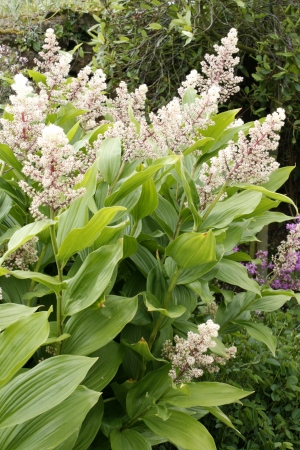
Smilacina racemosa
Yes, I had to go to the UK to be enlightened about a plant that grew in my own backyard. In my defense, I was so much younger then and much less enlightened. But here's the short of it. In 1992, my friend Dan Heims and I spent two solid weeks travelling around the UK visiting gardens, plant collections and friends. It was a plantsman's dream trip starting off with two nights as the guests of Agatha Christie's daughter, a day with Beth Chatto, a day with Elizabeth Strangman and many other legends of British gardening and culminating with a full day, sun up to sun down, of Dan and I strolling around Wisley with Graham Stuart Thomas just the three of us.
[More...]
|
|
|
![[]](//sunfarm.com/images/solcae-1.jpg)
|
Solidago caesia
Solidago caesia happens to be one of my very favorite Autumn
blooming perennials. The bright, Primrose yellow brilliance of its
unusual zig-zag, axillary, long lasting flower heads never fail to garner
praise from garden visitors. One of the most commonly asked questions,
after I answer the "WOW...what is that?" question is
"Doesn't it make you sneeze?" Poor, poor Goldenrod, taking the
heat for Ambrosia artemisiifolia just because it coincidentally
shares the same window of time in flowering. Ambrosia artemisiifolia
is the dreaded allergen, "Ragweed!" Goldenrod pollen DOES
NOT cause an allergic reaction.
[More...]
|
|
|
![[]](/images/spimar-sm.jpg)
|
Spigelia marilandica
Do you love your hummingbirds as much as I do mine, but loathe mixing sugar and water, getting all sticky while attracting every ant in the neighborhood? Do you want your hummingbird population to be healthy, imbibing REAL nectar? Then here's the plant for you! Often referred to by the non "Plant Geek" types as "Indian Pink", this very rare and unusual member of the Loganiaceae family couldn't be easier to grow. Spigelia marilandica is a long flowering perennial for sun or shade that has the most unique flowers I've ever experienced.
[More...]
|
|
|
|
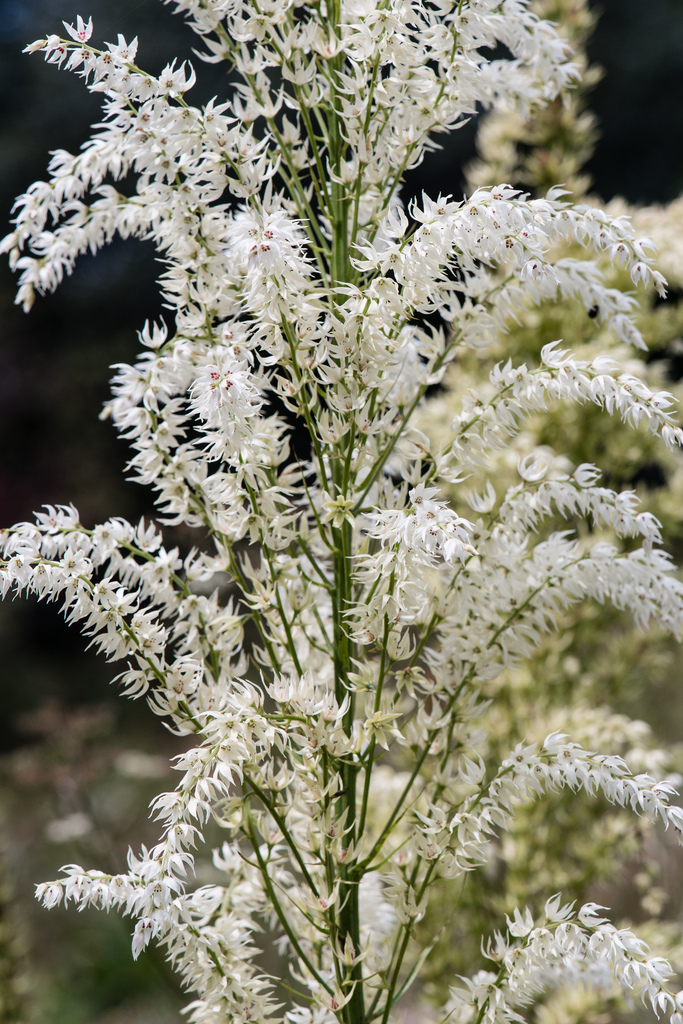
Stenanthium gramineum
If you're looking for a native shade perennial that blooms later in the season, and I mean late and for a long time, then I absolutely have the perfect plant for you! AKA "Eastern Featherbells", Stenanthium gramineum is a stunning member of the Melanthiaceae family, the same family as another of my faves, Veratrum viride. It's native to more than half the US and will grow well in just about any state in the US.
[More...]
|
|
|
![[]](/images/traut1.jpg)
|
Trautvetteria caroliniensis
You Need This Plant In Your Garden, IF...........
# 1 - You love the rare and unusual.
# 2 - You want to grow plants that none of your friends have ever even heard of.
# 3 - You want to be the envy of all your neighbors.
# 4 - You don't have the time or desire to baby or pamper plants.
# 5 - You have a small amount of shade or dappled sunlight.
# 6 - You like BOLD foliage.
# 7 - You're passionate about growing native plants.
[More...]
|
|
|
|
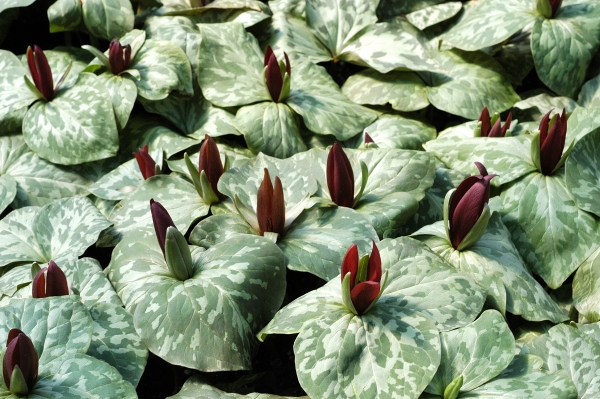
Trillium cuneatum
Despite their exotic, magical, mystical appearance, most Trilliums are
quite easy to grow and Trillium cuneatum is no exception. There
are at least one or more Trillium species native to every state in the US
but four. I've been growing
and propagating many species of Trillium over the last 38 years and the
only one that I wouldn't recommend for the average gardener is the lovely
[More...]
|
|
|
|
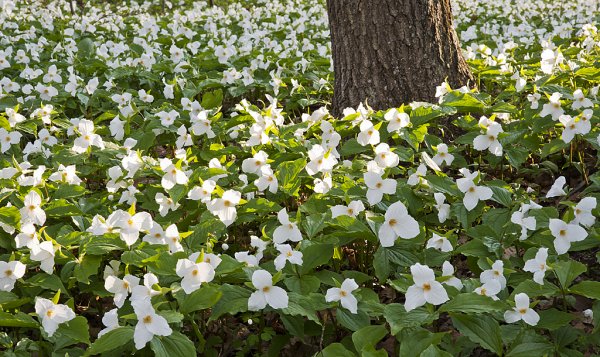
Trillium grandiflorum
Trilliums just have to be the most beloved wildflower of any native or non-native plants that I can think of. Many folks that I chat plants with, remember them fondly from childhood walks in the woods with their grandparents. Trilliums are very easy to grow and are a long lived perennial plant whose size can double every year when taken proper care of. Proper care means, just keeping them weeded and fed with a good perennial plant food and mulched to keep them from totally drying out during dry spells - that's all there is to it.
[More...]
|
|
|
|
Trillium luteum
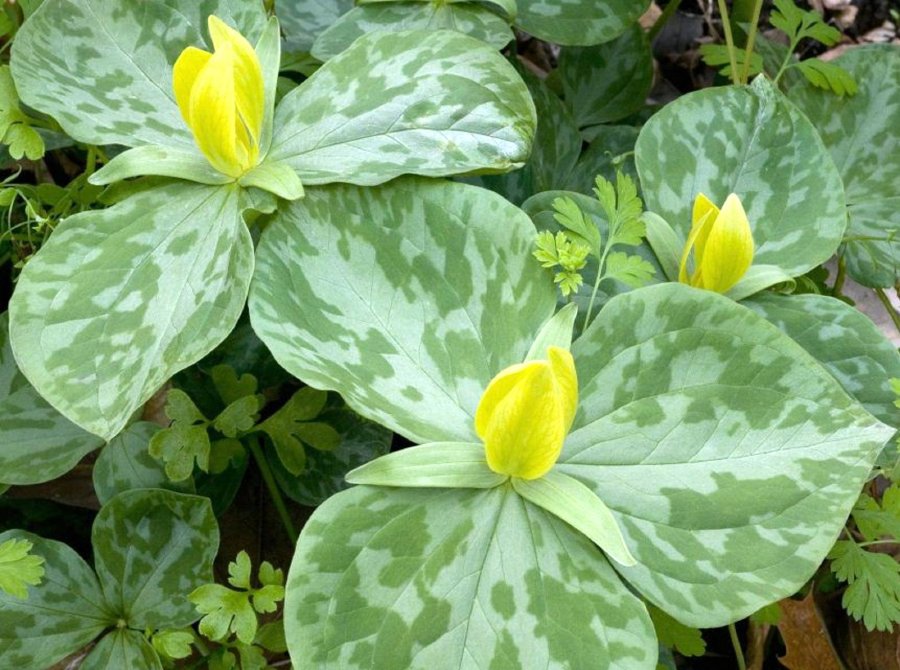
Luxurious Loveable Lemony Looks.... and fragrant to boot!!! With their bright yellow flowers in early to mid Spring and silvery marbled foliage, Trillium luteum is one plant whose fragrance matches its exotic looks. Their aroma can only be described as a lemony, jasmine scent that creates an intoxicating, fragrant cloud which lasts for quite a while as the flowers are very long lived.
[More...]
|
|
|
|
Uvularia grandiflora
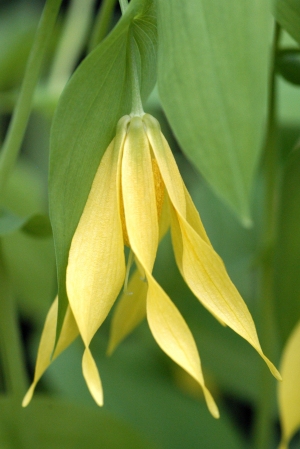
The long lasting flowers of Uvularia grandiflora are something I really look forward to every Spring. And every Spring, my robust stand of "Large Flowered Bellwort" slowly opens their large, pendulous, bright golden yellow flowers that resemble inverted flowing candle flames. Average plant height is about 18" - 24" and the medium green foliage of the plant provides a perfect foil for the unusually shaped flowers.
[More...]
|
|


![[]](http://sunfarm.com/images/allcer2.jpg)
![[]](http://sunfarm.com/images/Alstel.jpg)





![[]](http://sunfarm.com/images/clavir2.jpg)
![[]](http://www.sunfarm.com/images/clinumb1.jpg)
![[]](http://www.sunfarm.com/images/croelizgar-1.jpg)

![[]](http://sunfarm.com/images/disper.jpg)
![[]](http://www.sunfarm.com/images/gcand.jpg)
![[]](http://www.sunfarm.com/images/gegeo.jpg)
![[]](http://sunfarm.com/images/hnig1.jpg)
![[]](http://www.sunfarm.com/images/roses2.jpg)



![[]](http://www.sunfarm.com/images/ppjea3c.jpg)


![[]](http://sunfarm.com/images/solcae-1.jpg)



